
For students aiming for world-class business programs such as Wharton at UPenn, NYU Stern, LSE Finance, Oxford PPE, and more, the Wharton Global High School Investment Competition (WGHS) is undoubtedly the most valuable "golden credential" on their application profiles. Officially hosted by the Wharton School of the University of Pennsylvania, this competition is not merely a simulated investment game, but an academic experience that aligns with the standards of a top-tier business school.
I. Four Core College Admissions Advantages of the Wharton Competition
1. Authoritative Endorsement & High Recognition from Top Universities
The Wharton School has been ranked No. 1 among U.S. undergraduate business schools by U.S. News for many consecutive years. The WGHS judging panel consists of Wharton professors and senior Wall Street investors, making its award certificates equivalent to top-tier academic honors. Compared to ordinary school clubs or generic business activities, participation in the Wharton Competition carries far greater weight on applications to U.S. undergraduate programs in business, economics, finance, and social sciences.
2. Perfect Alignment with the Common App Application System
WGHS participation and awards can be directly listed in the "Academic Honors" section of the Common App application system. This not only demonstrates a student's long-term passion for business but also showcases academic potential and professional practical skills that surpass those of peers.
3. Comprehensive Alignment with Elite University Selection Criteria
Admissions officers at top universities value students' "initiative, professionalism, and results-orientation." Through its 10-week intensive simulation, the Wharton Competition systematically cultivates students' core competencies:
Hard Skills: Mastery of macroeconomic analysis, financial statement interpretation, company valuation modeling, portfolio management, and risk control.
Soft Skills: The 4–7 person same-school team format deeply develops teamwork, cross-functional communication, decision-making debate, project management, and academic writing abilities.
Practical Thinking: Based on the OTIS real-time simulation platform, teams track global market dynamics, formulate investment strategies, and write professional-grade reports — achieving a transformation from textbook theory to real-world business practice.
4. Precision Targeting for Business-Oriented Applications
Participation clearly demonstrates to admissions officers a student's well-defined career plan in business, advanced knowledge储备 (preparation), and an international perspective for solving complex business problems. For highly competitive business programs, this is the key differentiator from peers.
II. Targeted Preparation Priorities for Students in Different Curricula
To stand out in the competition, students in different curricula can leverage their strengths and address specific gaps:
AP Curriculum Students:
Utilize micro and macroeconomic knowledge to assess industry growth, and apply statistical methods for simple regression model analysis. Gap to Address: Focus on improving Excel financial modeling capabilities.
IB Curriculum Students:
Analytical frameworks from the Internal Assessment (IA) — such as SWOT and PESTEL — can be directly applied to industry analysis. The pyramid principle of writing helps build rigorous report logic. Gap to Address: Familiarize yourself in advance with core financial terms such as P/E ratio, ROE, and Beta coefficient.
A-Level Curriculum Students:
Leverage mathematical statistics modules to build the CAPM (Capital Asset Pricing Model), and combine this with economic theories of market failure and externalities to analyze markets. Gap to Address: Strengthen practical quantitative training using Python or Excel.
Preparation Advice: There is no need to deliberately study CFA (Chartered Financial Analyst) textbooks. It is recommended to thoroughly read the three introductory books officially recommended by Wharton to build a solid business mindset: The Leader's Checklist, The Shopping Revolution, and The Leader's Brain.
III. Key Points to Note for Wharton Competition Participation
Platform and Assets:
The WInS online platform synchronizes real-time global stock market data. The competition covers approximately 400 stocks (primarily U.S. equities) and ETFs. Teams may only trade stocks and ETFs from the approved list; trading or recommending assets outside this list is strictly prohibited.
Judging Core:
The selection of winners is not based solely on Return on Investment (ROI). The judging panel places greater emphasis on the logical soundness of the team's investment strategy, risk management capabilities, and overall performance.
Report Submission Red Line:
Both the interim report and the final report must be submitted on time. Teams that submit the final report but fail to submit the interim report will be directly disqualified from the semifinals and will not be eligible for a participation certificate.
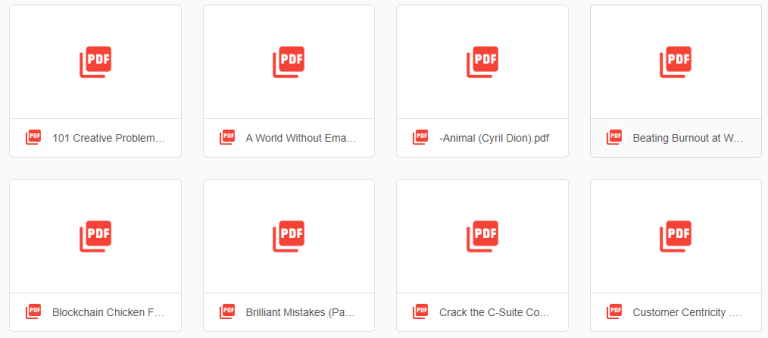
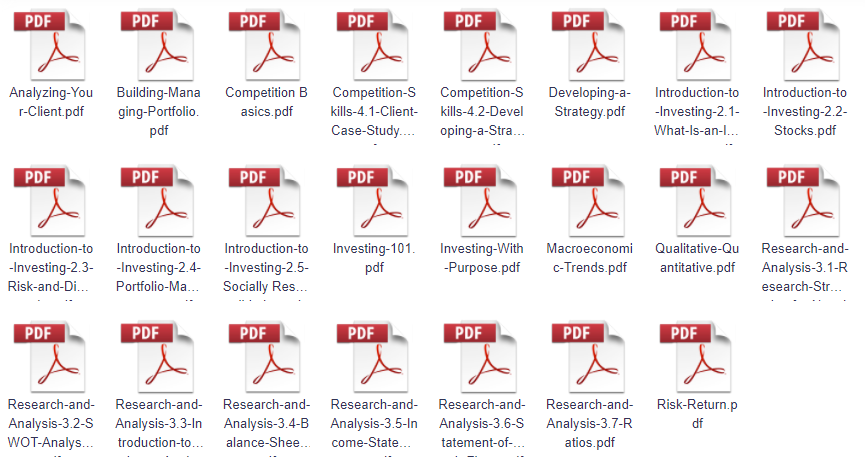
Scan the QR code to get free access to past exam papers, case studies, and required reading list.