

Wharton Global High School Investment Competition Full Process Analysis! What Makes It So Challenging?

The Wharton Global High School Investment Competition (WGHS) is more than just an investment simulation game—it is a comprehensive test of business acumen, teamwork, and academic writing. If you are planning to take on this top-tier competition, the following full-process guide and preparation strategies will give you a strong edge.

推荐

I. Full Competition Process and Core Rules

The competition schedule is tightly interlinked, requiring close collaboration at every stage:

Competition Flow: Registration → Online Investment Trading → Report Submission → Results Announcement → Online Semifinals → Global Finals

Participation Format: Teams of 4–6 members, all from the same school, with one designated team lead who must be at least 16 years old by the start of the competition.

Evaluation Content: Teams use the official Wharton simulation platform (WInS) to invest $250,000 in virtual funds in stocks and ETFs over a 10-week period. Additionally, they must complete two professional reports that systematically articulate their investment strategies and decision-making rationale.

Core Steps: Account Registration → Client Case Analysis → Investment Strategy Formulation → Simulated Trading → Investment Report Writing

Submissions: Midterm Report + Final Report

Judging Criteria Revealed:

The core of the WGHS evaluation is not simply return on investment, but rather the students' thought process and professional expression. The judging panel evaluates teams comprehensively based on five dimensions: investment strategy, client knowledge and objectives, portfolio analysis, articulation of competition experience, creativity, and presentation.

II. Key Challenges: Why is WGHS Called the "Pinnacle of Business Competitions"?

Participating in WGHS not only significantly enhances personal investment skills and business understanding but also serves as a "hardcore profile booster" for future applications to business programs. However, high value comes with high difficulty. To stand out, you must confront the following four major challenges:

1. Extremely Fierce Competition, Very Low Advancement Rate:
As the world's most authoritative high school business competition, WGHS attracts top students from around the globe. Last year, for example, a total of 1,374 teams and 7,558 students participated, but only 50 teams advanced to the semifinals, and only the top 10 made it to the global finals at the Wharton School in Philadelphia. Intense competition means this is definitely not a competition you can take lightly.

2. Tight Competition Pace, Time Management is Key:
Although the competition period is 10 weeks, the pace is extremely tight. Teams need to complete extensive market analysis, trading decisions, and report writing in a short time. If you start learning relevant knowledge or skills only after the competition begins, it will be too late. Only by preparing well in advance can you spend valuable time refining strategies and polishing reports, thereby gaining an edge over competitors.

3. High Level of Professionalism, Demanding Knowledge Requirements:
WGHS has a very high professional threshold. Participants need a solid foundation in mathematics, economics, and statistics, as well as proficiency in financial investment knowledge and advanced writing skills. In the final report, professional content such as financial statement analysis, financial situation interpretation, and SWOT analysis is essential—knowledge from school textbooks alone is far from sufficient.

4. Tight Teamwork, No Room for Individual Heroism:
In WGHS, team coordination, strategy formulation, and execution have a decisive impact on the final result. From industry research and data analysis to report writing and pitch presentations, any obvious weakness in any area will drag down overall performance. Only a well-rounded, clearly divided, and highly cohesive team can ultimately produce high-quality competition results.

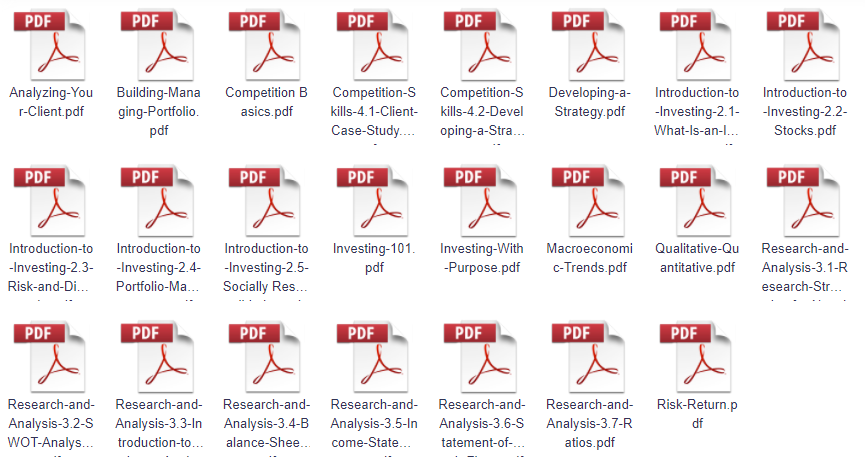
Scan to claim free resources (Original text: "QR Code [Free Access] Past Papers + Case Studies + Required Reading List for Competition Preparation!")
Online Customer Service | WeChat Inquiry

推荐

Wharton Global High School Investment Competition vs. SIC: A Comprehensive Comparison! Which is the Ultimate Choice for Your Profile Enhancement?

Among the many high school business competitions in the finance and investment field, the Wharton Global High School Investment Competition (WGHS) and the Student Investment Challenge (SIC) are undoubtedly the two most popular premier events. Many parents and students often find themselves torn: should they challenge the "pinnacle of business competitions" Wharton, or opt for the "entry-level favorite" SIC?

To help you make an informed decision, we have conducted an in-depth comparison from core dimensions such as organizer authority, competition difficulty, and target audience.

推荐

I. Comprehensive Comparison of Core Dimensions: WGHS vs. SIC

1. Organizer & Authority: Ivy League Prestige vs. Official Certification

Wharton (WGHS): Directly organized by the Wharton School of the University of Pennsylvania, a globally top-tier business school. It is hailed as the "Olympics of business competitions." Its award certificates carry exceptional weight in international admissions (especially for U.S. undergraduate applications) and serve as a "nuclear-grade" profile highlight highly recognized by Ivy League and G5 universities.

SIC: Officially certified by the Council for Economic Education (CEE) and supported academically by the American-Chinese Modern Economics Society (ACME). Its recognition has risen rapidly in the Asia-Pacific region in recent years, and it has received a recommendation from HKU Business School, making it a highly promising authoritative competition.

2. Entry Requirements & Team Formation: Strict Same-School vs. Flexible Cross-School

Wharton: Open to students in grades 9-12. Team formation rules are very strict: teams must consist of 4-7 students from the same school (cross-school teams are not allowed) and must have an advisor. This places high demands on the school's business atmosphere and team cohesion.

SIC: Open to students in grades 6-12, with a broader threshold. It is divided into the Trading Division (individual participation) and the Strategy Division (2-4 person teams). The biggest advantage is that it allows cross-school and cross-region team formation, so even if you have no teammates at your school, you can easily find like-minded partners.

3. Competition Timeline & Core Tasks: Long-Term Practical vs. Short-Term Fast-Paced

Wharton: A 10-week "marathon." Teams manage $100,000 in virtual funds, conduct simulated trading on Wharton's official OTIS platform, and write interim and final investment strategy reports. Advancement requires online/offline presentations.

SIC: A shorter timeline, typically 4-6 weeks. The Trading Division focuses on financial knowledge assessment and simulated trading practice; the Strategy Division focuses on individual stock analysis, report writing, and roadshow presentations, emphasizing fundamental micro-analysis of companies.

4. Evaluation Focus & Difficulty Level: Comprehensive Strategy vs. Logical Foundation

Wharton: The evaluation does not solely focus on return on investment, but rather on the alignment of the investment strategy with client goals, asset allocation logic, risk management, and teamwork. It tests comprehensive abilities in financial modeling, industry research, and professional academic writing in English—extremely challenging.

SIC: Places more emphasis on the soundness of investment logic, solid foundational knowledge, and the appropriateness of stock valuation methods. The winning rate is relatively friendly, making it ideal for beginners to gain confidence.

5. Advancement Difficulty & Award Scarcity: Elite Selection vs. Inclusive Incentive

Wharton: Only about 50 teams worldwide advance to the semifinals, and only the top 10 reach the Wharton School finals. The awards are highly scarce, providing a powerful advantage for targeting top-tier universities.

SIC: A higher proportion of teams advance to the global finals (approximately 40% of Strategy Division teams), with abundant awards at the regional level. Even without advancement, the complete investment report produced is strong material for applications to institutions like the top three universities in Hong Kong.

II. Find Your Fit: Which One is Right for You?

SIC is more suitable for students who:

Have zero or beginner-level business knowledge: Have never been exposed to stocks or financial statements and want a smooth entry point with SIC.

Are test-takers with limited time: Cannot commit to a 3-4 month preparation cycle; SIC's short, fast-paced timeline fits perfectly into fragmented time during the semester.

Need to quickly build a competition record: The regional round winning rate is about 45%, allowing you to quickly obtain a demonstrable competition experience and positive feedback.

Have limited resources at school: The Strategy Division allows cross-school team formation, requiring just 2 people to start, without being constrained by whether the school has a business club.

Wharton (WGHS) is more suitable for students who:

Have a solid academic foundation: Have studied AP Micro/Macro, IB Business, or A-Level Economics, providing a preliminary analytical framework.

Have strong teamwork skills: Can find compatible teammates at the same school, communicate and divide work consistently, and dedicate 5-8 hours weekly to research and writing.

Are set on targeting top-tier universities: Aspire to top business programs like Wharton, LSE, or HKU Business School, and need a highly recognizable "outstanding" profile.

Accept high investment and high risk: Understand that investing a lot of time may not necessarily lead to an award, but even without an award, the high-quality research report produced itself carries strong persuasive power for college admissions.

Preparation Advice: For students with abundant time and energy, you can fully adopt a "SIC first, then Wharton" strategy. Gain practical experience and trading intuition from SIC, then challenge the academic heights of the Wharton competition to maximize the value of your competition journey.

2026-2027 WGHS Complete Guide: Schedule Planning and Award-Winning Strategies

As the world's premier high school investment competition, the Wharton Global High School Investment Competition (WGHS) is not only a "golden credential" for applying to top business programs but also an excellent opportunity to deeply develop business thinking and teamwork skills. If you are planning to compete in the 2026-2027 season, the following detailed schedule and preparation strategies will give you a significant advantage.

推荐

I. 2026-2027 WGHS Key Timeline

The WGHS schedule spans a relatively long period. It is recommended that teams plan well in advance to ensure high-quality delivery at each key milestone:

June 2026: Registration opens. Team registration begins. It is recommended to use the summer to prepare for team formation and foundational learning.
September 2026: Registration closes and trading begins. Complete online registration and lock in member information (cannot be changed after submission). The 10-week virtual investment simulation officially starts at the end of the month.
Early November 2026: Midterm report due. Review initial decisions and market reactions, and finalize the team roster.
Early December 2026: Last trading day. End all virtual trading and begin data organization and final report preparation.
Mid-December 2026: Final report submission deadline. Submit a complete strategy report covering core content such as client profile, asset allocation, and risk management.
January 2027: Semifinalist announcement. The global top 50 teams advance.
March 2027: Virtual semifinals. Online defense sessions determine the global top 10 finalists.
April 2027: Global final. Advancing teams compete in person at the Wharton School in Philadelphia.

II. Competition Requirements and Core Evaluation

Eligibility: High school students in grades 9-12 (ages 14-18). A foundation in English (e.g., IELTS, TOEFL) and some knowledge of finance and economics is recommended.

Team Rules: Each team must consist of 4-6 members, all from the same school. One member must be designated as the team lead and be at least 16 years old at the start of the competition.

Assessment Format: Teams use the official Wharton WInS simulation trading platform to invest $250,000 in virtual funds in stocks and ETFs over a 10-week period.

Core Deliverables: In addition to simulated trading data, teams must submit two professional reports — a Midterm Report and a Final Report — that systematically articulate their investment strategy and decision-making rationale.

推荐

III. Report Writing Guide: How to Break into the Global Top 50?

Judges place greater emphasis on the scientific rigor of the investment strategy rather than simple returns. Below is a proven structure and writing strategy for high-scoring reports:

1. Midterm Report (Due early November, recommended length: 2 pages)

Core Content: Concisely explain current positions and reasons for any adjustments, and present preliminary risk control data.
Writing Principle: Avoid unnecessary details, get straight to the point, and demonstrate the team's ability to respond quickly to market dynamics.

2. Final Report (Due mid-December, recommended length: 10-12 pages)

Investment Philosophy (1 page): Clearly define the team's core philosophy (e.g., value investing, growth stock strategy, or factor investing).
Client Profile (1 page): Describe the hypothetical client's risk tolerance, investment horizon, and return objectives.
Asset Allocation (2 pages): Elaborate on the rationale for selecting specific industries and stocks, as well as the basis for weight allocation.
Trading Review (2 pages): Honestly analyze profitable and losing trades, summarizing the lessons learned.
Risk Management (2 pages): Use professional metrics such as Sharpe ratio, maximum drawdown, and diversification for quantitative analysis.
Reflection and Limitations (1 page): Honestly acknowledge the shortcomings of the strategy to demonstrate critical thinking.

3. Advantages for Advancing

Data Visualization: Use clear charts instead of flashy templates. Let the data speak.
Sharpe Ratio: Teams with a Sharpe ratio ≥ 1.5 have a significantly higher chance of advancing.
Investment Diversification: The number of sectors invested in must be ≥ the number of team members (e.g., a team of 5 must cover at least 5 different industries).

IV. Avoiding Common Pitfalls: Three Mistakes Most People Make

Mistake 1: The higher the return, the better.
Absolutely wrong. In the official scoring, investment strategy accounts for 30%, client alignment accounts for 20%, and return is not even a separate scoring item. A 50% return achieved through speculative bets is far inferior to a well-reasoned, risk-controlled 10% return.
Mistake 2: The longer the report, the more professional it looks.
Not true. The final report should ideally be 10-12 pages. Anything over 15 pages may be penalized for redundancy. The core is to clearly explain: What is the investment logic? Why does it match the client's needs? How is feasibility proven with data?
Mistake 3: Only recruiting "stock-savvy people" for the team.
The final challenge of the WGHS is not who understands candlestick charts best, but who can organize complex ideas into a logically rigorous, readable professional report. Therefore, in addition to financial analysis experts, a team also needs members skilled in copywriting, data chart creation, and project progress coordination.

How the Wharton Global High School Investment Competition Becomes a “Hardcore Ticket” for Top-Tier University Applications? What are the Key Preparation Focuses for Students from Different Curriculum Systems?

For students aiming for world-renowned business programs such as Wharton at UPenn, NYU Stern, LSE Finance, or Oxford PPE, the Wharton Global High School Investment Competition (WGHS) is undoubtedly the "golden ticket" in their application portfolio. Officially hosted by the Wharton School of the University of Pennsylvania, this competition is not just an investment simulation game, but an academic baptism that benchmarks the standards of top business schools.

I. Four Key Advantages of the Wharton Competition for University Admissions

1. Authoritative Endorsement, Highly Recognized by Top Universities

Wharton has consistently ranked first in the U.S. News undergraduate business school rankings for many years. The judging panel for WGHS consists of Wharton professors and seasoned Wall Street investors. The value of its award certificate is directly equivalent to a top-tier academic honor. Compared to ordinary school clubs or business activities, participating in the Wharton competition provides a highly persuasive background for students applying to undergraduate programs in business, economics, finance, and social sciences in the US.

2. Perfectly Fits the Common App System

Participation and awards from the Wharton competition can be directly listed under the "Academic Honors" section of the Common App. This not only demonstrates a student's long-term passion for the business field but also showcases academic potential and practical professional skills that surpass their peers.

3. Fully Aligns with Top University Selection Criteria

Top university admissions officers value a student's "initiative, professionalism, and results-orientation." Through a 10-week intensive simulation, the Wharton Competition systematically builds students' core competencies:

Hard Skills: Mastering professional financial skills such as macroeconomic analysis, financial statement interpretation, company valuation modeling, portfolio management, and risk control.

Soft Skills: The team-based format (4-7 members from the same school) deeply develops teamwork, cross-functional communication, decision-making debates, project management, and academic writing.

Practical Thinking: Using the OTIS real-time simulation platform to track global market dynamics, formulate investment strategies, and write professional-grade reports, achieving a transformation from textbook theory to real-world business practice.

4. Professional Focus, A Targeted Boost for Business Applications

Competition experience clearly demonstrates to admissions officers a student's well-defined career plan in business, advanced knowledge base, and an international perspective for solving complex business problems. For highly competitive business majors, this is a key differentiator from other applicants.

推荐

II. Key Preparation Focuses for Students from Different Curriculum Systems

To stand out in the competition, students from different educational backgrounds can leverage their strengths and address weaknesses accordingly:

AP System Students:

Utilize macroeconomic and microeconomic knowledge to assess industry prospects, and apply statistics for simple regression model analysis. Weakness to Address: Focus on improving Excel financial modeling skills.

IB System Students:

Analytical frameworks from the Internal Assessment (IA), such as SWOT and PESTEL, can be directly reused for industry analysis, and the Pyramid Principle for writing helps build rigorous report logic. Weakness to Address: Familiarize in advance with core financial terms like P/E ratio, ROE, and Beta.

A-Level System Students:

Utilize mathematical statistics modules to build the Capital Asset Pricing Model (CAPM), combining economic theories like market failure and externalities for market analysis. Weakness to Address: Strengthen hands-on quantitative training in Python or Excel.

Preparation Advice:

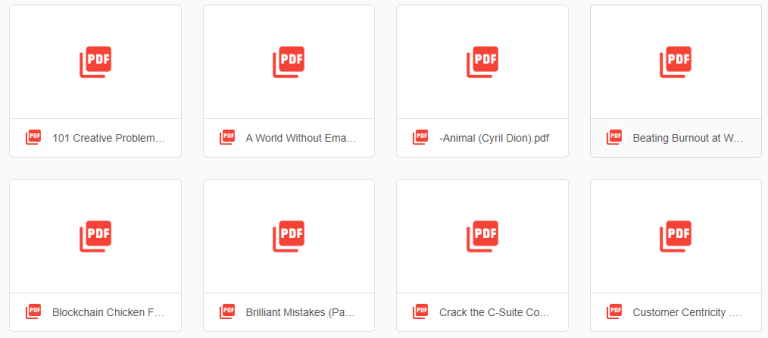
There's no need to deliberately dig into CFA textbooks. It's recommended to read the three entry-level books officially recommended by Wharton to build a solid business mindset: "The Leader's Checklist," "The Shopping Revolution," and "The Leader's Brain."

III. Key Notes for Wharton Competition Participants

Platform and Securities:

The WInS online platform synchronizes global stock market data in real time. The competition covers approximately 400 stocks (mainly US stocks) and ETFs. Teams can only trade securities on the approved list; recommending or trading securities outside this list is strictly prohibited.

Judging Core:

The winners are not determined solely by Return on Investment (ROI). The judges place greater emphasis on the logic of the team's investment strategy, risk control capabilities, and overall performance.

Report Submission Red Line:

Both the interim and final reports must be submitted on time. Teams that submit a final report but fail to submit the interim report will be directly disqualified from participating in the semi-finals and receiving a certificate of participation.

Scan to claim free resources (Original text: "Scan QR Code [Free Access] Past Papers + Case Studies + Required Reading List for Competition Preparation!")

Online Customer Service | WeChat Inquiry

推荐

Online Customer Service
Contact Customer Service