


Every investment decision made in the Wharton Global High School Investment Competition takes place within a broader economic context. Stock prices do not move in isolation — they are shaped by macroeconomic forces that influence the entire market, from interest rates and inflation to employment levels and global trade flows. For WGHS participants, understanding these macroeconomic forces is not optional. It is essential. A team that ignores the economic environment is like a sailor who sets out to sea without checking the weather forecast — they may reach their destination, but they will be at the mercy of forces they neither understand nor anticipate.
Macroeconomics is the study of the economy as a whole, rather than individual companies or industries. It examines the aggregate behavior of millions of households, firms, and governments, and seeks to understand the forces that drive economic growth, inflation, unemployment, and financial stability. For investors, macroeconomic analysis provides the context in which all company-specific analysis takes place. A company with excellent fundamentals may still struggle if the broader economy is in recession. Conversely, a company with mediocre fundamentals may thrive in a booming economy. Understanding how macroeconomic forces affect different sectors, asset classes, and individual stocks is a critical skill for any WGHS team that wants to build a resilient, well-reasoned portfolio.

Gross Domestic Product and Economic Growth
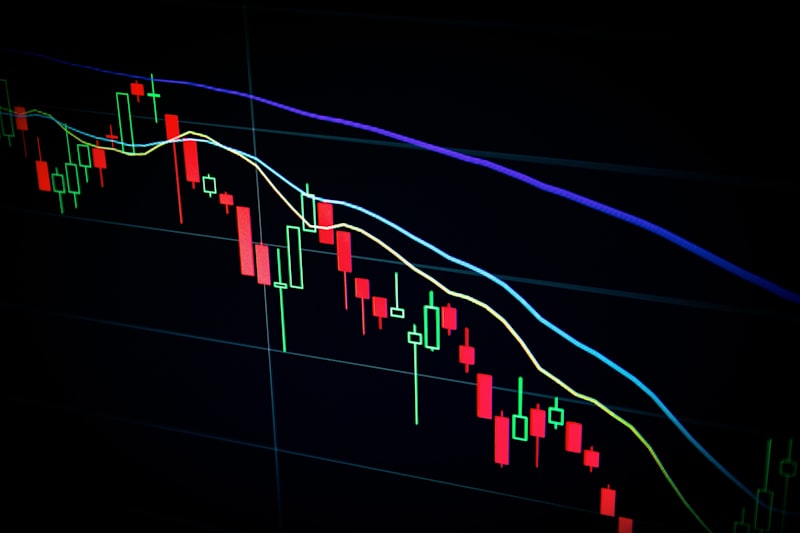
Gross Domestic Product, or GDP, is the most widely used measure of a country's economic output. It represents the total value of all goods and services produced within a country's borders over a specific period, typically a quarter or a year. GDP growth is a key indicator of economic health, and it has profound implications for financial markets and investment decisions.
When GDP is growing, it generally signals a healthy economy. Businesses are producing more, consumers are spending more, and employment is typically rising. In this environment, corporate earnings tend to grow, which supports higher stock prices. Cyclical sectors — those that are sensitive to economic conditions, such as consumer discretionary, industrials, and materials — tend to outperform during periods of strong GDP growth. Investors are more willing to take risks, and equity markets generally rally.
Conversely, when GDP growth slows or turns negative, the economy enters a slowdown or recession. Businesses cut production, consumers reduce spending, and unemployment rises. Corporate earnings decline, and stock prices often fall. Defensive sectors — those that provide essential goods and services, such as utilities, healthcare, and consumer staples — tend to outperform during economic downturns because demand for their products remains relatively stable regardless of economic conditions. For WGHS teams, understanding where the economy is in the business cycle is essential for making informed asset allocation decisions and selecting appropriate holdings for their client's portfolio.
Inflation and Its Impact on Investments

Inflation is the rate at which the general level of prices for goods and services rises over time, eroding purchasing power. It is one of the most important macroeconomic variables for investors to understand, because it affects virtually every aspect of financial markets — from interest rates to corporate profits to the real value of investment returns.
Moderate inflation, typically around two to three percent per year, is generally considered healthy for an economy. It signals that demand is growing and that the economy is expanding. However, when inflation rises too quickly, it can create significant problems. High inflation erodes the real value of savings and fixed-income investments, such as bonds. It forces central banks to raise interest rates to cool the economy, which can slow growth and pressure stock prices. It also increases input costs for companies, squeezing profit margins if they are unable to pass those costs on to consumers.
For WGHS teams, inflation has several important implications for portfolio construction. In a high-inflation environment, bonds typically underperform because their fixed interest payments lose real value. Stocks may also struggle if rising interest rates increase borrowing costs and reduce corporate valuations. However, certain asset classes and sectors tend to perform well during inflationary periods. Companies with strong pricing power — those that can raise prices without losing customers — are better positioned to protect their margins. Real assets, such as commodities and real estate, often serve as inflation hedges because their prices tend to rise along with general price levels. Treasury Inflation-Protected Securities, or TIPS, are specifically designed to protect against inflation. Understanding these dynamics allows teams to build portfolios that are resilient to inflationary pressures and aligned with their client's long-term objectives.
Interest Rates and Monetary Policy

Interest rates are the price of money — the cost of borrowing and the return on lending. They are set primarily by central banks, such as the Federal Reserve in the United States, and they have a profound influence on financial markets, economic activity, and investment decisions. Understanding how interest rates work and how they affect different asset classes is essential for any WGHS team.
When central banks lower interest rates, borrowing becomes cheaper for businesses and consumers. Companies can invest in new projects, expand operations, and hire more workers. Consumers can take out mortgages, buy cars, and spend more freely. This stimulates economic growth and typically supports stock prices. Lower interest rates also make bonds less attractive, because their yields decline, pushing investors toward equities in search of higher returns.
When central banks raise interest rates, the opposite occurs. Borrowing becomes more expensive, which slows business investment and consumer spending. Economic growth cools, and inflation pressures ease. Higher interest rates make bonds more attractive, because their yields rise, and they put downward pressure on stock prices by increasing the discount rate used to value future earnings. For WGHS teams, monitoring central bank policy and interest rate trends is critical. A team that anticipates a shift in monetary policy can position its portfolio to benefit from the change — for example, by reducing duration in a bond portfolio before rates rise, or by rotating into sectors that benefit from a stronger or weaker economy.
Employment and Consumer Spending
Employment levels and consumer spending are closely linked to economic growth and corporate performance. When unemployment is low and wages are rising, consumers have more disposable income to spend on goods and services. This drives revenue growth for companies, particularly those in consumer-facing sectors such as retail, hospitality, and entertainment. Conversely, when unemployment rises and wages stagnate, consumer spending contracts, and companies that depend on discretionary spending often see their revenues and profits decline.
For WGHS teams, employment data provides valuable insight into the health of the economy and the prospects for different sectors. A strong jobs report may signal that the economy is expanding and that cyclical stocks are likely to perform well. A weak jobs report may signal that the economy is slowing and that defensive positioning is warranted. Teams should also pay attention to wage growth, because rising wages can boost consumer spending but also increase labor costs for companies, squeezing margins in labor-intensive industries.
Consumer confidence surveys are another useful tool for gauging the economic outlook. When consumers feel optimistic about their financial prospects and the broader economy, they are more likely to spend, invest, and take on debt. When they feel pessimistic, they tend to save more and spend less. These shifts in consumer behavior have direct implications for corporate earnings and stock prices, and they provide WGHS teams with a forward-looking indicator of economic trends.
Global Trade and Currency Markets

In an increasingly interconnected world, no economy exists in isolation. Global trade flows, currency exchange rates, and geopolitical events all influence domestic economic conditions and financial markets. For WGHS teams, understanding these international dimensions is essential for building a portfolio that is resilient to global shocks and positioned to benefit from international opportunities.
Currency exchange rates play a particularly important role in international investing. When a country's currency strengthens relative to others, its exports become more expensive and its imports become cheaper. This can hurt export-oriented companies while benefiting companies that rely on imported inputs. Conversely, when a currency weakens, exports become more competitive and imports become more expensive. For teams that include international stocks or ETFs in their portfolio, currency movements can significantly affect returns, even if the underlying companies perform well.
Global trade policies and geopolitical tensions also have significant implications for financial markets. Tariffs, trade agreements, and sanctions can disrupt supply chains, alter competitive dynamics, and create uncertainty that weighs on stock prices. WGHS teams should monitor these developments and consider how they might affect the companies in their portfolio. A company that relies heavily on international trade may be more vulnerable to trade disruptions than a company that operates primarily in domestic markets. Understanding these risks allows teams to build more resilient portfolios and to explain their reasoning clearly in their investment strategy report.
Fiscal Policy and Government Spending

Fiscal policy refers to the government's use of taxation and spending to influence the economy. It is distinct from monetary policy, which is controlled by central banks, but the two often work in tandem to shape economic conditions. For WGHS teams, understanding fiscal policy is important because government decisions on taxes, infrastructure spending, healthcare, defense, and other areas can have significant implications for specific sectors and the broader market.
Expansionary fiscal policy — increased government spending or tax cuts — can stimulate economic growth by boosting demand and putting more money in the hands of consumers and businesses. This tends to benefit cyclical sectors and can support stock prices. However, it can also lead to higher budget deficits and government debt, which may create long-term economic challenges. Contractionary fiscal policy — reduced spending or tax increases — can slow the economy but may be necessary to control inflation or reduce debt levels.
For WGHS teams, fiscal policy analysis involves examining government budgets, legislative proposals, and policy priorities. A major infrastructure spending bill, for example, could benefit construction companies, materials suppliers, and engineering firms. Changes in healthcare policy could affect pharmaceutical companies, insurers, and healthcare providers. Tax reform could alter corporate profitability and investment incentives. By staying informed about fiscal policy developments, teams can identify opportunities and risks that may not be immediately apparent from company-specific analysis alone.
Business Cycles and Market Timing
Economies do not grow in a straight line. They move through cycles of expansion and contraction, often referred to as business cycles. These cycles are driven by a complex interplay of factors, including monetary policy, fiscal policy, technological innovation, and shifts in consumer and business confidence. Understanding where the economy is in the business cycle is one of the most valuable skills an investor can develop.
The typical business cycle has four phases: expansion, peak, contraction, and trough. During expansion, economic output grows, employment rises, and corporate profits increase. Stock markets generally perform well during this phase. At the peak, growth reaches its maximum rate, and inflationary pressures may build. Central banks may raise interest rates to prevent the economy from overheating. During contraction, economic output declines, unemployment rises, and corporate profits fall. Stock markets often decline during this phase. At the trough, the economy reaches its lowest point, and the stage is set for the next expansion.
For WGHS teams, business cycle analysis is not about trying to time the market perfectly — that is virtually impossible. It is about understanding the economic environment and positioning the portfolio accordingly. During an expansion, a team might tilt toward cyclical sectors and growth stocks. During a contraction, a team might shift toward defensive sectors and value stocks. The key is to align the portfolio with the economic environment while remaining true to the client's long-term objectives and risk tolerance.
Putting Macroeconomics Into Practice
Understanding macroeconomic concepts is one thing; applying them to investment decisions is another. For WGHS teams, the challenge is to translate macroeconomic analysis into concrete portfolio decisions that serve the client's needs. This requires a disciplined approach that integrates top-down macroeconomic analysis with bottom-up company-specific research.
A practical approach is to start with the big picture and work down. First, assess the overall economic environment. Is the economy growing or contracting? Is inflation rising or falling? What is the central bank's policy stance? What are the major risks on the horizon? This macro assessment provides the context for more detailed analysis. Second, consider how the macro environment affects different asset classes. In a rising-rate environment, for example, bonds may be less attractive, while financials may benefit. Third, consider how the macro environment affects different sectors. Cyclical sectors tend to outperform in expansions, while defensive sectors tend to outperform in contractions. Fourth, within each sector, conduct company-specific analysis to identify the strongest holdings. Finally, synthesize all of this analysis into a coherent portfolio that reflects both the macro environment and the client's objectives.
This top-down approach does not replace fundamental analysis — it complements it. A company with excellent fundamentals may still be a poor investment if it operates in a sector that is facing macroeconomic headwinds. Conversely, a company with mediocre fundamentals may be a good investment if it is positioned to benefit from favorable macro trends. The most successful WGHS teams understand how these dimensions interact and use both to build portfolios that are resilient, well-reasoned, and aligned with their client's goals.
Final Thoughts
Macroeconomics may seem abstract and distant from the day-to-day decisions of stock selection and portfolio management. In reality, it is the foundation on which all investment decisions rest. Interest rates, inflation, GDP growth, employment, and global trade flows shape the environment in which every company operates and every stock trades. For WGHS participants, developing a solid understanding of these forces is not just an academic exercise — it is a practical necessity.
The beauty of macroeconomic analysis is that it provides a framework for making sense of a complex and often chaotic world. It does not offer perfect predictions — no one can predict the future with certainty. But it does offer a way to think systematically about the forces that drive markets and to make more informed, more disciplined investment decisions. For WGHS teams that embrace this perspective, the competition becomes not just a test of analytical skill, but an opportunity to develop the kind of economic literacy that will serve them well throughout their lives.
For more resources on macroeconomics and financial markets, explore the educational materials available through the official Wharton Global Youth Programs website at global.youthprograms.wharton.upenn.edu.