

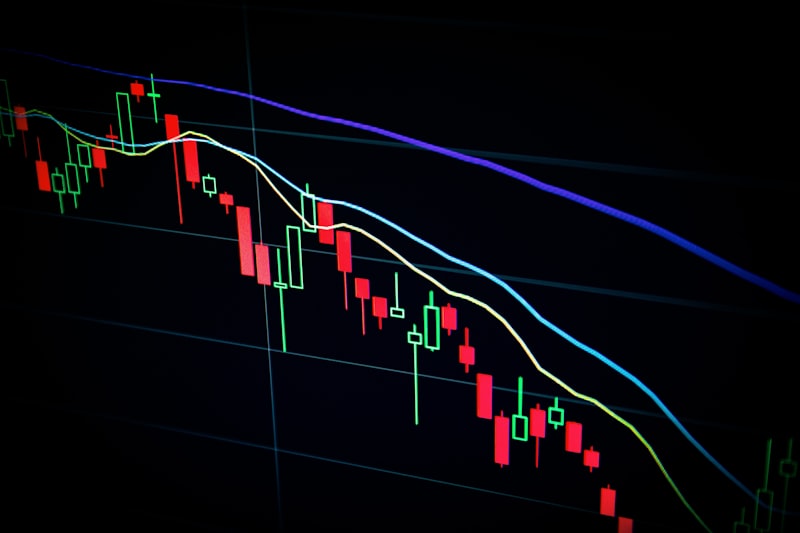
Many students enter the Wharton Global High School Investment Competition believing that the winning team is simply the one that picks the stock that rises the most. In reality, the judges at WGHS are rarely impressed by a single lucky bet. What they value far more is a thoughtful, disciplined approach to managing risk. A portfolio that grows steadily while protecting against major losses demonstrates a far deeper understanding of investing than one that swings wildly between spectacular gains and devastating drops. Learning how to manage risk and diversify effectively is one of the most important skills a WGHS team can develop, and it is a skill that will serve young investors for the rest of their lives.
Risk management is not about avoiding risk entirely. Every investment carries some degree of risk, and attempting to eliminate it completely usually means accepting returns so low that they fail to grow your capital at all. Instead, risk management is about understanding the risks you are taking, sizing them appropriately, and structuring your portfolio so that no single event can derail your entire strategy. This article explores the core principles of risk management and diversification and shows how WGHS teams can apply them to build a stronger, more resilient portfolio and a more convincing investment report.
Understanding Risk in Investing

Before a team can manage risk, it must understand what risk actually means. In investing, risk is most commonly defined as the uncertainty surrounding an investment's future returns. An asset whose price is highly unpredictable is considered riskier than one whose price is stable, because there is a wider range of possible outcomes. Professional investors often measure this uncertainty using a statistical concept called volatility, which describes how much and how quickly an investment's price tends to move. A highly volatile stock can produce enormous gains, but it can just as easily produce enormous losses.
It is helpful to think about risk in two distinct categories. The first is systematic risk, sometimes called market risk, which affects the entire market at once. Examples include recessions, interest rate changes, geopolitical conflicts, and broad economic shocks. No matter how carefully you pick individual stocks, you cannot fully escape systematic risk, because it moves the whole market together. The second category is unsystematic risk, also known as company-specific risk, which affects a single company or industry. A failed product launch, a management scandal, or a new competitor can damage one firm without touching the rest of the market. This distinction matters enormously for diversification, because while you cannot diversify away systematic risk, you can significantly reduce unsystematic risk by spreading your investments across many different companies and sectors.
A mature WGHS team demonstrates risk awareness by explicitly discussing both types of risk in its report. Rather than presenting a portfolio as a collection of sure things, strong teams acknowledge what could go wrong and explain how their structure limits the damage from any single failure. Judges notice this honesty and sophistication, because it reflects the way real professional investors think.
The Power of Diversification

Diversification is the practice of spreading your investments across a variety of assets so that the poor performance of any single holding has a limited impact on your overall portfolio. The logic behind it is often summarized by the familiar saying not to put all your eggs in one basket. If your entire portfolio is concentrated in a single company and that company encounters serious trouble, your whole portfolio suffers. If instead you hold positions across many companies, the damage from one struggling holding is cushioned by the stability of the others.
For WGHS teams, diversification can take several forms. The most basic is holding a reasonable number of different stocks rather than concentrating everything in one or two names. Beyond simply counting holdings, however, effective diversification means spreading investments across different industries and sectors. A portfolio that holds five technology companies is not truly diversified, because all five are likely to rise and fall together based on the same forces affecting the technology sector. A more genuinely diversified portfolio might include holdings in technology, healthcare, consumer goods, energy, and financial services, so that weakness in one part of the economy is balanced by strength in another.
Diversification can also extend across company size, geographic exposure, and investment style. A mix of large established companies and smaller growing firms can provide both stability and growth potential. Similarly, companies that earn revenue in different regions of the world can reduce a portfolio's dependence on the economic health of any single country. When a WGHS team can articulate a clear diversification strategy and explain why each holding contributes something distinct to the whole, it signals a level of portfolio thinking that goes well beyond simple stock picking.
Correlation and Why It Matters

The true benefit of diversification depends on a concept called correlation, which measures how closely the returns of two investments move together. Correlation ranges from negative one to positive one. A correlation of positive one means two assets move perfectly in sync, while a correlation of negative one means they move in exactly opposite directions. A correlation near zero means their movements are largely unrelated. The key insight is that diversification only works when the assets in your portfolio are not all highly correlated with one another.
Imagine a team that believes it has diversified by holding ten different stocks, but all ten are airlines. Because airline stocks tend to respond to the same factors such as fuel prices, travel demand, and economic conditions, they are highly correlated. When the airline industry struggles, all ten holdings are likely to fall at the same time, and the portfolio behaves almost as if it held a single stock. In contrast, a portfolio that pairs airline holdings with healthcare, utilities, and consumer staples is likely to be far more stable, because these sectors respond to different economic forces and do not all move together.
WGHS teams do not need to calculate precise correlation coefficients to benefit from this idea, but they should think critically about whether their holdings genuinely offset one another. A useful exercise is to ask what would happen to the portfolio under different economic scenarios. If interest rates rise, which holdings benefit and which suffer? If the economy slows down, which companies are defensive and which are most exposed? A portfolio that contains holdings likely to perform differently under the same conditions is genuinely diversified, while a portfolio whose holdings all respond identically is concentrated in disguise. Explaining this reasoning in the investment report shows judges that the team understands diversification at a deeper level than simply owning many stocks.
Balancing Risk and Reward

One of the most fundamental principles in investing is the relationship between risk and reward. In general, investments that offer the potential for higher returns also carry higher risk, while safer investments tend to offer more modest returns. This relationship exists because investors demand compensation for taking on additional uncertainty. Understanding this tradeoff helps teams avoid two common mistakes: chasing high returns without appreciating the risks involved, and being so conservative that the portfolio has little chance of meaningful growth.
A thoughtful WGHS portfolio typically blends different types of holdings to balance this tradeoff. Some positions might be higher conviction growth opportunities that carry more risk but offer substantial upside potential. Other positions might be more stable, established companies that provide a steadier foundation and help reduce overall portfolio volatility. The art lies in deciding how much of the portfolio to allocate to each type based on the team's overall goals, time horizon, and tolerance for uncertainty.
Position sizing is a crucial part of this balance. Even a strong conviction idea should not necessarily consume the entire portfolio, because doing so concentrates risk. Conversely, spreading capital so thinly across dozens of tiny positions that no single idea can meaningfully affect returns defeats the purpose of having conviction at all. Effective teams think deliberately about how much capital each holding deserves relative to its risk and potential reward. This kind of intentional allocation demonstrates disciplined judgment, and it gives the team a clear story to tell judges about why the portfolio is structured the way it is.
Building Risk Discipline Into Your Process

Risk management is most effective when it is built into a team's decision-making process from the start rather than applied as an afterthought. Strong WGHS teams establish clear criteria for adding a holding to the portfolio, and they also establish criteria for removing one. Deciding in advance under what circumstances a position would be sold helps prevent emotional decision-making during periods of market stress, when fear and excitement can cloud judgment.
It is also valuable for teams to regularly review their portfolio as a whole rather than focusing only on individual holdings. A periodic review allows a team to check whether the portfolio remains diversified, whether any single position has grown so large that it now dominates the portfolio's risk, and whether the original reasons for holding each investment still apply. Markets change, and a portfolio that was well balanced at the start of the competition may drift out of balance as some holdings grow faster than others. Recognizing and correcting this drift is a sign of mature portfolio management.
Finally, teams should document their risk management thinking clearly in their investment report. Judges appreciate transparency about how a team identified, measured, and addressed risk. A report that openly discusses potential downsides and explains the safeguards the team put in place projects confidence and competence. It shows that the team is not merely hoping for the best but has genuinely prepared for a range of possible outcomes. This combination of thoughtful diversification, deliberate position sizing, and disciplined process is what separates a good WGHS portfolio from a great one.
Final Thoughts
Risk management and diversification may not be the most glamorous aspects of investing, but they are among the most important. The ability to build a portfolio that can weather uncertainty while still pursuing growth is a hallmark of a sophisticated investor, and it is exactly the kind of thinking that WGHS judges reward. By understanding the difference between systematic and unsystematic risk, diversifying genuinely across sectors and styles, paying attention to correlation, balancing risk against reward through thoughtful position sizing, and embedding discipline into every decision, a WGHS team can dramatically strengthen both its portfolio and its investment report.
Perhaps most importantly, these principles extend far beyond the competition. The habits of mind that good risk management develops, including humility about uncertainty, patience, and disciplined decision-making, are the same habits that lead to sound financial choices throughout a lifetime. For students participating in WGHS, learning to manage risk well is not just a path to a stronger competition result. It is the beginning of a lifelong skill that will protect and grow their financial future long after the competition ends.