

Which Majors Is the Wharton Investment Competition Suitable For? When Is the Best Grade to Start Preparing?

As a highly prestigious "ceiling-level" event among global high school business competitions, the Wharton Global High School Investment Competition attracts elite teams from top high schools worldwide every year. However, many parents and students hold a misconception: that only those who want to study "finance" should participate. In reality, the underlying logic of the Wharton Investment Competition revolves around analytical decision-making, teamwork, and logical narrative. So, which majors' applicants can truly benefit from it? And for students in different grades, when is the most "cost-effective" time to enter this track?
推荐
I. Which Majors' Applicants Is the Wharton Investment Competition Suitable For?
Although it bears the name "investment," in an era of increasingly prevalent interdisciplinary applications, an achievement in the Wharton Investment Competition provides significant boosts to the following majors:

1. Traditional Business and Management
This is the core audience.
Boosting Points: The competition requires students to build a real investment portfolio, learning to read 10-K annual reports and understanding asset allocation. This not only proves your academic depth but also infuses your application essays with concrete details—you can precisely describe how you analyzed the "moat" of a certain tech giant, rather than just saying "I love business."

2. Economics and Econometrics
Boosting Points: Economics applicants need to demonstrate insight into macro trends and market principles. In the Wharton Investment Competition, you must analyze how Federal Reserve policies and inflation data affect your industry choices. This transformation from "theoretical models" to "market practice" is a quality highly valued by top university economics departments.

3. Mathematics and Applied Mathematics
Boosting Points: For "math whizzes," the Wharton Investment Competition is an excellent stage to showcase your ability to apply mathematics. By quantitatively modeling stock beta values and portfolio risk-adjusted returns, you can prove to admissions officers that your math skills can not only solve difficult problems but also tackle complex real-world issues.

4. Data Science and Computer Science
Boosting Points: Modern investment is inseparable from data. If you use Python for backtesting within your team, or analyze market sentiment through web scraping and incorporate the findings into your report, you will stand out among CS or data science applicants, demonstrating strong cross-disciplinary application abilities.

5. Social Sciences and Humanities
Boosting Points: The Wharton Investment Competition places strong emphasis on "client needs" and "ESG (Environmental, Social, Governance)." If you can explain, from a social responsibility perspective, why you invest in a certain environmentally friendly company, it reflects your reflection on global issues, making it an excellent academic supplement for social science-oriented backgrounds.

II. When Is the Best Grade to Start Preparing? (The Golden Planning Timeline)
The Wharton Investment Competition is a typical "long-cycle" project (lasting from September to December), demanding high levels of knowledge preparation and time management from students.

1. Grade 9: Interest Budding and "Observation Period"
Advice: 9th graders usually have a weaker foundation in core subjects (like accounting and economics). It is not recommended to directly serve as team captain, but you can join senior teams as an "industry analysis assistant."
Core Goal: Familiarize yourself with the competition process, learn to use Wharton's OTIS trading system, understand market rhythms, and accumulate experience for the main competition in the coming year.

2. Grade 10: Golden Starting Point and "Academic Advancement Period"
Advice: This is the most ideal starting point for participation.
Advantages: Academic pressure in 10th grade is relatively manageable, providing ample time to acquire knowledge of financial analysis and industry analysis over the summer. Even if you don't reach the global finals this year, the experience will give you a crushing advantage in experience when aiming for gold in 11th grade (the final year before the application season).

3. Grade 11: Peak Pursuit and "Profile Finalization Period"
Advice: If you have a relevant foundation, 11th grade is the year you must achieve results.
Challenges: With the pressure of SAT/ACT and maintaining your GPA, your team must be highly efficient. If you can lead your team to the regional finals this year, that honor will directly appear on your college application (Activities List), becoming one of the most weighty academic credentials.

III. Key Milestones for Preparing for the 2026 Season
Regardless of your current grade, preparation for the 2026 season should follow this timeline:

Summer (July–August): Fill in the Gaps. The team should finalize its members during this period and collectively study basic accounting and valuation models. This is the only window to transform from a novice into an analyst.
Early September: Strategic Direction. The competition prompt (client's needs) is released. Within two weeks, the team must determine its "investment philosophy"—aggressive growth or steady defense?
October–November: Strategy Execution. Monitor the market daily, review weekly, and begin drafting the interim report.
推荐

How Does the Wharton Investment Competition Boost College Applications? What Level of Foundation Is Suitable? Comprehensive In-Depth Review

In the landscape of business competitions for international high school students, the Wharton Investment Competition consistently holds the "top of the pyramid" position. As an event officially hosted by the world's premier business school—the Wharton School of the University of Pennsylvania—its annual popularity is truly phenomenal.

For students aiming to gain admission to Ivy League schools, G5 universities, or other top-tier business programs, just how significant a boost can the Wharton Investment Competition bring to their applications? And if you are a complete "finance novice," are you still qualified to participate? This article will break it down for you point by point.

推荐

I. The Tangible Boost of the Wharton Investment Competition for College Applications
The Wharton Investment Competition is not simply "simulated stock trading"; it is an academic immersion that integrates financial analysis, strategic collaboration, and communication skills. Its impact on applications is reflected in the following four dimensions:

1. "Academic Lineage" Endorsement from a Top Business School
Since the competition is directly organized by the Wharton School, its award certificate carries extremely high credibility in the eyes of admissions officers. If you can stand out among thousands of teams globally and advance to the regional semifinals or the global finals, this in itself is the strongest evidence of your academic potential.

2. Differentiated "Leadership" Narrative Material
College application essays place great emphasis on leadership and teamwork. The 10-week preparation cycle of the Wharton Investment Competition inevitably involves team strategy conflicts, pressure from market fluctuations, and complex division of labor and collaboration. These authentic experiences are excellent material for writing essays on "teamwork" or "overcoming challenges," and are far more compelling than generic volunteer teaching or ordinary club activities.

3. Demonstrating Deep "Commitment" to the Finance Industry
Admissions officers tend to favor students who have made long-term investments in a specific field. Participating in the Wharton Investment Competition requires reviewing a large volume of corporate annual reports, learning complex valuation models, and writing professional investment reports. This complete process clearly demonstrates to admissions officers that your passion for business is not a fleeting whim but a resolute choice forged through rigorous academic training.

4. Cultivating the Rare Ability of "Logical Modeling" and "Written Expression"
The competition ultimately requires the submission of two major reports (an interim report and a final report). This trains students to transform dry market data into a rigorous logical chain. This ability is a core quality for business, economics, and even social science research, and a common requirement for top universities seeking high-caliber talent.

II. What Level of Foundation Is Suitable for the Wharton Investment Competition?
Many worry that "non-academic stars shouldn't touch Wharton," but this is actually a misconception. The target audience for the Wharton Investment Competition is broader than imagined, but different roles require different positioning:

1. The "Core Backbone" with a Solid Foundation in Finance/Economics
Profile: Has already taken AP/IB/A-Level Economics in school, or possesses strong mathematical modeling skills.
Role: Suitable for serving as team captain or industry analyst, responsible for constructing portfolio logic and conducting advanced valuation analysis such as DCF (Discounted Cash Flow).

2. The "Narrative Expert" with Strong Reading and Writing Abilities
Profile: Proficient in English writing, able to transform complex data into compelling stories, or possesses strong critical thinking skills.
Role: Responsible for refining the logic of the report and articulating the "investment philosophy." Wharton judges place great importance on whether the report is "logically coherent" and whether the team truly understands the client's needs.

3. The Curious "Finance Novice" (Strategy for Average Students to Advance)
Profile: No prior exposure to finance, but possesses strong rapid learning ability and execution skills.
Role: The Wharton Investment Competition is actually quite suitable for beginners to start with. As long as you are willing to invest time over the summer, novices can begin with industry research and complete the business transformation from 0 to 1 through hands-on practice.

推荐

How Difficult Is It to Win an Award in the Wharton Global High School Investment Competition? Key Skills Students from Different Curriculum Systems Need to Focus On!

In the realm of high school business competitions, the Wharton Global High School Investment Competition (WGHS) consistently stands at the very top. As an international event officially hosted by the Wharton School of the University of Pennsylvania, it serves not only as a benchmark for academic prowess but also as a "direct ticket" to top-tier business schools.

However, facing competition from thousands of elite teams worldwide, just how difficult is it to win an award in the WGHS? Moreover, how can students from different curriculum systems—such as AP, IB, A-Level, and the Chinese national curriculum—target their efforts to strengthen their weaknesses?

推荐

I. Complete Analysis of the Difficulty of Winning Awards in the Wharton Global High School Investment Competition: Why Is "Winning" Extremely Hard?
The award rate in the WGHS is extremely low. The probability of advancing globally to the Regionals is typically less than 10%, and those who ultimately make it to the Global Finale are even rarer. The difficulty is mainly reflected in the following three dimensions:

1. The "Non-Profitability" Tendency of the Judging Criteria
This is the biggest misconception. Many students believe that earning more money increases their chances of winning. However, the WGHS judges value "logical coherence." You must demonstrate precisely how your investment actions align with the specific goals, risk preferences, and financial constraints of the client. This strategy rigor, ranging from qualitative analysis to quantitative valuation, demands a very high level of logical thinking.

2. The Comprehensive Application of Interdisciplinary Knowledge
The competition requires students to complete macroeconomic analysis, industry research, qualitative stock analysis, financial valuation modeling, and risk management within ten weeks. This intensity is akin to a real-world, second- or third-year undergraduate business school course. The knowledge span is huge for high school students.

3. The "Professional-level" Requirements for Report Writing
The two reports ultimately submitted (the interim report and the final report) need not only solid data but also a high degree of business storytelling ability, much like a consulting firm's proposal. How to articulate complex investment logic clearly, convincingly, and engagingly is the key to differentiating top-tier teams.

II. What Should Students from Different Curriculum Systems Focus On?
Given the different educational emphases of each system, students' strengths and weaknesses when participating in the WGHS vary:

1. AP Curriculum Students: From "Fragmented Knowledge" to "Systematic Modeling"
Strength: AP Economics (Macro/Micro) provides a solid foundation, allowing students to quickly grasp concepts like supply and demand and market structures.
Weakness: Lack of training in practical research and long-form logical report writing.
Focus for Improvement: Enhance foundational accounting and financial analysis skills. Learn to read 10-K annual reports and practice integrating scattered economic indicators into a complete industry analysis framework.

2. IB Curriculum Students: From "Essay-based Thinking" to "Data-driven Logic"
Strength: Through their experience with IAs (Internal Assessments) and the EE (Extended Essay), IB students possess strong academic research and report writing abilities, often excelling in written expression.
Weakness: They may be relatively less proficient in handling intensive quantitative analysis.
Focus for Improvement: Enhance mathematical modeling skills and the application of valuation tools. Heighten sensitivity to financial metrics like P/E ratio, ROE, and Beta, ensuring strong data supports your narrative rather than relying on "text-only sentiment."

3. A-Level Curriculum Students: From "Focused Depth" to "Divergent Thinking"
Strength: A-Level students are deeply knowledgeable in specific areas, such as the interpretation of economic principles, and have a very solid foundation.
Weakness: Problem contexts are usually more structured, which may lead to a lack of flexibility when faced with the open-ended, dynamic market scenarios typical of WGHS.
Focus for Improvement: Enhance critical thinking and cross-industry associative ability. Focus more on real-world business cases rather than just textbook theories. Train yourself to identify investment opportunities from social trends.

4. Students from Chinese National / "Regular" High School Curriculum: From "Calculation Skills" to "Business Storytelling"
Strength: Their mathematical fundamentals are extremely strong, with high accuracy in calculations, giving them a significant edge in handling quantitative risk models.
Weakness: English business writing and understanding of international business culture.
Focus for Improvement: Enhance academic English and professional communication skills. Learn to structure your storytelling according to the logic of Western business schools. Learn to solve problems from a "client perspective" rather than an "exam-oriented perspective."

推荐

Is the Wharton Global High School Investment Competition a "Low-Value" Contest? How Much Prestige Does It Hold? Plus the Latest Entry Requirements!

In the world of international education and college planning, the "Wharton Global High School Investment Competition" is a household name. However, as various business competitions emerge, many parents and students have begun to question: Is the Wharton investment competition a "low-value" contest? And how much prestige does it really hold for top-tier university applications? This article will dissect the true nature of WGHS and provide the latest entry requirements for the 2026 season.

推荐

I. Is the Wharton Investment Competition a "Low-Value" Contest?
Let's get straight to the conclusion: The Wharton Global High School Investment Competition is by no means a "low-value" contest. It is a "ceiling-level" event among global high school business competitions, recognized for its highest difficulty, greatest academic prestige, and lowest winning rate.

The misconception of it being "low-value" may stem from its relatively open registration threshold. However, once actually competing, most teams face the following "hardcore" challenges:

Non-Gambling Nature: This is not a "stock-picking contest" about who makes the most money. If you make money purely by luck but cannot logically explain your strategy in the report, your score will be very low.
Extremely High Elimination Rate: With thousands of teams competing globally, the probability of advancing to the regional semifinals is typically less than 10%.
Significant Workload: Ten weeks of continuous trading, plus an interim report and a final summary. Each report demands professional-level business writing and financial analysis, a rigor far beyond any "low-value" contest.

II. How Much Prestige Does the Wharton Investment Competition Really Hold?
The prestige of the Wharton investment competition is reflected in its direct impact on application outcomes and its deep cultivation of student abilities.

1. The "Golden Ticket" to Top-Tier Institutions: Since the competition is officially hosted by the Wharton School of the University of Pennsylvania, its award certificate enjoys extremely high recognition among top business schools nationwide and globally. A significant portion of past winners were ultimately admitted to Ivy League institutions such as the University of Pennsylvania, Harvard, and Yale.

2. A Top-Tier Endorsement of Interdisciplinary Skills: The Wharton competition assesses: financial literacy, logical modeling, teamwork, and business narrative. It proves that you not only understand economic principles but can also read 10-K annual reports and transform dry data into logically rigorous investment strategies. This comprehensive ability is a core metric used by admissions officers to evaluate "future business leaders."

3. A "Treasure Trove" of Essay Material: Compared to overused volunteer activities, elements of the Wharton competition—such as team power dynamics, high-pressure decisions during market downturns, and deep dives into a particular industry's moat—provide exceptionally vivid and differentiated material for writing college application essays (Common App Essay).

III. Latest Entry Requirements and Rules (2026 Season Reference)
To help you plan ahead, we have summarized the following core requirements based on the latest trends released by Wharton officials:

1. Team Formation Requirements
Number of Members: Each team must consist of 4 to 6 current high school students (grades 9-12).
Team Formation Rule: All members must come from the same school.
Advisor Requirement: Each team must have an advisor, typically a school teacher, an instructor from an educational institution, or a professional consultant.

2. Core Tasks
Simulated Investing: Teams must conduct a 10-week simulated trading session on the OTIS trading platform provided by Wharton, using $100,000 in virtual capital.
Client-Centric Approach: Each year, the official case study provides a "virtual client." All of the team's investment decisions must revolve around that client's financial goals (e.g., long-term retirement plan, charitable fund, home purchase plan, etc.).

3. Submissions
Interim Report: Briefly outlines team roles and initial investment philosophy.
Final Report: This is the most heavily weighted component of the evaluation. The report must detail the investment strategy, industry analysis, risk assessment, and the strategy adjustment process over the 10-week period.

推荐

How the Wharton Investment Competition Serves as a "Hard-Core Gateway" to Elite University Admissions? Targeted Preparation Strategies for Different Curriculum Systems

For students aiming for world's top business programs such as UPenn Wharton, NYU Stern, LSE Finance, and Oxford PPE, the Wharton Global High School Investment Competition (WGHS) is undoubtedly the "golden ticket" on their application credentials. Officially hosted by the Wharton School of the University of Pennsylvania, this competition is not merely a simulated investment game but an academic baptism that benchmarks the standards of top-tier business schools.

推荐

I. Four Core Advantages of the Wharton Investment Competition for College Admissions

1. Authoritative Endorsement, Highly Recognized by Prestigious Universities
Wharton School has consistently ranked first in the U.S. News undergraduate business school rankings for years. The WGHS judging panel consists of Wharton professors and seasoned Wall Street investors, making the value of its award certificate directly equivalent to top-tier academic honors. Compared to regular school clubs or business activities, participation in the Wharton competition serves as a highly persuasive background credential for applications to U.S. undergraduate business, economics, finance, and social science programs.

2. Perfectly Fits the Common App Application System
Participation and achievements in the Wharton competition can be directly listed under the "Academic Honors" section of the Common App application system. This not only intuitively demonstrates a student's long-term passion for the business field but also showcases their academic potential and professional practical abilities that surpass their peers.

3. Fully Aligns with Top-Tier University Selection Logic
Top university admissions officers value students' "initiative, professionalism, and results orientation." Through its 10-week hands-on simulation, the Wharton competition systematically forges students' core competencies:

Hard Skills: Mastery of professional financial skills such as macroeconomic analysis, financial statement interpretation, company valuation modeling, portfolio management, and risk control.
Soft Skills: The team format of 4-7 members from the same school deeply develops team collaboration, cross-departmental communication, decision-making debate, project management, and academic writing abilities.
Practical Thinking: Tracking global market dynamics, formulating investment strategies, and writing professional-grade reports based on the OTIS real simulation platform enable the transformation from textbook theory to real-world business practice.

4. Professional Orientation, Precisely Assisting Business School Applications
Participation experience clearly demonstrates to admissions officers a student's defined career plan in business, advanced knowledge reserves, and an international perspective for solving complex business problems. For applying to highly competitive business majors, this is the key to standing out from peers.

II. Targeted Preparation Focus for Students in Different Curriculum Systems
To stand out in the competition, students from different curriculum systems can leverage their own strengths for targeted improvements:

AP System Students:
Utilize knowledge of micro/macroeconomics to assess industry prosperity, and apply statistics for simple regression model analysis. Weakness to Supplement: Focus on improving Excel financial modeling skills.

IB System Students:
Analytical frameworks from IA (Internal Assessment), such as SWOT and PESTEL, can be directly reused for industry analysis, and the Pyramid Principle writing approach helps construct rigorous report logic. Weakness to Supplement: Familiarize yourself early with core financial terms such as P/E ratio, ROE (Return on Equity), and Beta coefficient.

A-Level System Students:
Utilize mathematical and statistical modules to build the CAPM (Capital Asset Pricing Model), and analyze markets by combining economic theories of market failure and externalities. Weakness to Supplement: Strengthen hands-on quantitative training using Python or Excel.

Preparation Advice: No need to deliberately study CFA textbooks. It is recommended to thoroughly read three introductory books officially recommended by Wharton to establish a solid business mindset: "The Leader's Checklist," "The Shopping Revolution," and "The Leader's Brain."

III. Key Considerations for Participating in the Wharton Competition

Platform & Assets:
The WInS online platform synchronizes global stock market data in real time. The competition covers approximately 400 stocks (mainly U.S. stocks) and ETFs. Teams may only buy and sell stocks and ETFs on the approved list; recommending or trading assets outside the list is strictly prohibited.

Judging Core:
Winners are not determined solely by Return on Investment (ROI). The judging panel places greater emphasis on the logical coherence of the team's investment strategy, risk control abilities, and overall performance.

Report Submission Red Line:
The mid-term report and final report must be submitted on time. Teams that submit a final report but fail to submit a mid-term report will be directly disqualified from entering the semi-finals and from receiving a participation certificate.

推荐

What Do Winning Teams in the Wharton Global High School Investment Competition Do Right? Why Is It Called an "Extremely Difficult" Business Competition?

In the landscape of international business competitions, the Wharton Global High School Investment Competition (WGHS) consistently stands at the very top. Not only is it hosted by the Wharton School of the University of Pennsylvania, ranked the "#1 Undergraduate Business School" by U.S. News, but its extremely rigorous judging criteria and highly realistic simulation environment have also earned it a reputation as both a "ticket to top-tier universities" and the "most grueling business competition."

Thousands of teams from around the globe participate each year, but only a handful make it to the finals and take home the trophies. What exactly do those winning teams do right? And why does this competition stump so many students who excel in the sciences and business? Let's break it down.

推荐

I. Why Is WGHS Called an "Extremely Difficult" Business Competition?

Many newcomers think this is just a "stock trading competition"—whoever has the highest return rate wins. But in WGHS, that mindset is the number one reason for elimination. Its difficulty stems from three main dimensions:

1. Extremely Complex "Multi-Constraint Conditions"
WGHS is not about simple buying and selling. Participating teams manage a virtual fund of $100,000 but must strictly adhere to Wharton's investment rules:

Sector Limitations: Portfolios must cover multiple sectors; you cannot heavily concentrate on a single track.
Strategy Alignment: Every investment action must serve the specific financial objectives of a potential client outlined in the case study.
Case Variations: Each year's official "client case" presents a unique scenario (e.g., saving for a retiring teacher's pension or planning an education fund for a startup entrepreneur). Returns that ignore the client's needs hold no value in the eyes of the judges.

2. Demanding "Academic Writing" Requirements
The core output of WGHS is not a return rate chart but two deeply analytical reports: the Mid-term Strategy and the Final Investment Strategy.

The Challenge: You must articulate your macroeconomic analysis, industry research logic, valuation models (DCF, multiples methods, etc.), and risk management frameworks in professional financial language. The quality of these reports carries far more weight in the overall score than your trading account's performance.

3. High "Team Collaboration" Threshold
This is a marathon lasting several months. Teams need a clear division of labor: some members handle quantitative analysis, others industry research, and others report writing. Once communication breaks down or strategies become misaligned, the entire team's performance can quickly spiral downward.

II. What Do Winning Teams Do Right? (Deconstructing Their Winning Logic)
By analyzing past global final champions, we find that winning teams excel in the following three areas:

1. Strategy Cohesion Centered on the Client
Winning teams never chase high returns by buying risky junk stocks.

Core Action: They first spend considerable time analyzing the client case study. If the client is conservative, their asset allocation leans toward defensive sectors with stable cash flows.
Key Point: The judges value "logical consistency" above all. Does your investment portfolio perfectly respond to the client's life goals, risk tolerance, and time preferences as described in the case study?

2. Constructing a Rigorous "Investment Research System"
Winning teams operate more like a small-to-mid-sized hedge fund.

Core Actions:
Quantitative Analysis: Using Beta to measure volatility and Sharpe Ratio to evaluate risk-adjusted returns.
Qualitative Analysis: Conducting in-depth industry analyses (Porter's Five Forces) and company fundamental research.
Key Point: They don't just list "what to buy." They clearly articulate "why buy it now" and "under what circumstances to sell."

3. "Counter-Intuitive" Risk Management
Ordinary teams panic when losing and grow greedy when winning.

Core Action: Top-tier teams have comprehensive risk contingency plans. They discuss the impact of factors like higher-than-expected inflation or geopolitical risks on their portfolios and establish corresponding hedging strategies.
Key Point: Wharton places great emphasis on a student's respect for "uncertainty." Demonstrating your diversification strategies and dynamic position adjustment logic in detail often impresses the judges more than showcasing your profit curve.

III. Advice for the 2026-2027 Season Participants
If you plan to compete in the new season, this summer is the best time to build your "moat":

Fill the Gaps in Your Financial Knowledge: Don't just read the news; systematically learn accounting basics and financial statement analysis. Understand the economic meaning behind core indicators like P/E, P/S, and ROE.
Master Financial Tools: Practice using platforms like Yahoo Finance or Bloomberg (or their alternatives) to gather historical data and learn how to build simple multi-factor stock selection models in Excel.
Polish Your Business Writing: Read past winning reports to understand their structure and language, then practice writing your own concise, persuasive analyses.

推荐

Complete Analysis of the Wharton Global High School Investment Competition Mechanism! How to Prepare for WGHS Based on Your Curriculum System?

Officially hosted by the Wharton School of the University of Pennsylvania, the Wharton Global High School Investment Competition (WGHS) is renowned as the "pinnacle of business competitions." Its core content revolves around two main pillars: the "Investment Strategy Report" and "Simulated Trading Operations," aiming to comprehensively assess high school students' business acumen through intensive practical simulations.

I. Core Mechanism of the Wharton Investment Competition: Practical Simulation and Strategy Output
Participating teams will engage in a 10-week competition, using the OTIS online trading and investment simulation platform provided by Wharton, with an initial virtual capital of $100,000 for simulated investments in the global stock market. The OTIS platform synchronizes global stock market data in real time. Teams must select stocks from the list provided by the system, comprehensively consider market changes and risk control, and formulate and execute investment strategies.

The ultimate core deliverable of the competition is a professional final report (Final Strategy Overview). This report is not merely a summary of trading results but a reflection of the team's investment philosophy. It must encompass the team's investment plan, strategic rationale and theoretical foundation, conduct an in-depth retrospective analysis of investment outcomes, and provide a specific investment proposal for the hypothetical "client" in the case study, thereby demonstrating the team's rigorous investment logic and decision-making process.

推荐

II. Four Key Advantages of the Wharton Investment Competition for College Admissions

1. Authoritative Endorsement, Highly Recognized by Prestigious Universities
As a competition hosted by the No.1 business school according to U.S. News, the WGHS certificate holds the same weight as a top-tier academic honor. Its judging panel consists of Wharton professors and seasoned Wall Street investors, giving it a value far exceeding that of regular school activities or ordinary business competitions. It serves as a high-impact background credential for applications to undergraduate business, economics, finance, and social science programs in the U.S.

2. Direct Inclusion in the Common App Application System
Participation and achievements in WGHS can be directly listed under "Academic Honors" on the Common App application system. This provides admissions officers with tangible evidence of the applicant's professional interests, hands-on abilities, and academic potential, with persuasiveness far superior to ordinary club activities or summer school experiences.

3. Comprehensive Alignment with Top-Tier University Selection Criteria
Through its 10-week long-term practical format, WGHS perfectly aligns with the selection criteria of top-tier universities: initiative, professionalism, and results orientation. In terms of hard skills, students will master macroeconomic analysis, financial statement interpretation, company valuation, and portfolio management. In terms of soft skills, the team format of 4-7 members from the same school fosters deep collaboration, cross-functional communication, and academic writing abilities. In terms of practical thinking, the writing of professional-level strategy reports on the OTIS platform facilitates the transition from textbook theory to real-world business application.

4. Targeted Support for Business-Focused Applications
For students targeting top programs such as Wharton at the University of Pennsylvania, NYU Stern, LSE Finance, Oxford PPE, or UCL Economics, WGHS offers the strongest professional alignment. It clearly demonstrates the applicant's defined career plan in business, professional knowledge that surpasses peers, and an international perspective for solving complex business problems.

III. Targeted Preparation Advice for Different Curriculum Systems

IB Curriculum Students: Leverage Essay and Research Strengths
The IB Economics curriculum's coverage of macroeconomic policies and market structures is highly suitable for industry analysis. IB students are advised to fully utilize their Extended Essay (EE) writing experience to enhance the logical rigor of the final report. Additionally, they can practice business case analyses—such as competitive strategies of companies like Tesla—by integrating their Internal Assessment (IA) projects.

AP Curriculum Students: Strengthen Quantitative Analysis and Modeling
The knowledge foundation from AP Microeconomics/Macroeconomics and Statistics can be directly applied to stock valuation and market trend analysis. AP students are advised to focus on enhancing their Excel financial modeling skills (e.g., learning to build Discounted Cash Flow models) and to frequently consult in-depth industry reports from publications like The Wall Street Journal to sharpen their business acumen.

A-Level Curriculum Students: Leverage Strengths in Mathematics and Statistics
The statistics modules within A-Level Mathematics and Further Mathematics provide a natural advantage for building risk models such as the Capital Asset Pricing Model (CAPM). A-Level students are advised to acquire basic Python skills for automated data retrieval, while also deeply studying classic works like Warren Buffett's Letters to Shareholders to cultivate a profound value investing mindset.

推荐

How Beginners Can Get Started with the Wharton Global High School Investment Competition? When Is the Best Grade to Start Preparing?

In the world of business background enhancement within international education, the Wharton Global High School Investment Competition is undoubtedly the "crown jewel." As a premier event officially hosted by the Wharton School of the University of Pennsylvania, it attracts tens of thousands of top high school students from around the globe to compete each year.

However, this also brings a common concern: "I haven't studied accounting, and I've never traded stocks. As a complete 'business novice,' can I still participate in the WGHS? How do I get started? What grade should I start preparing in to avoid just being an also-ran?"

This article will outline a hardcore path from zero to hero for you.

Part I: How Can a Complete 'Novice' Get Started Smoothly? (Four-Step Strategy)

The WGHS is not just a "stock trading competition." Beyond immediate returns, Wharton professors value the logical coherence of investment strategies and the team's research framework. Therefore, a complete novice can absolutely succeed through systematic preparation.

推荐

1. Step One: Reframe Your Mindset – Abandon the "Gambler's Mentality"

Action Guide: From day one, clarify that you are not there to predict price fluctuations but to practice asset management. Your task is to read the official "Case Study," understanding the client's risk tolerance and financial goals. Taking a client-needs-driven approach is the fundamental logic of the WGHS.

2. Step Two: Master the "Three Major Financial Statements" – Build a Solid Theoretical Foundation

You don't need to work like a professional accountant, but you must be able to read financial statements.

Action Guide: During summer break, quickly learn the Balance Sheet, Income Statement, and Cash Flow Statement. Understand key metrics like P/E Ratio, Return on Equity (ROE), and Free Cash Flow. These are your "microscopes" for evaluating whether a company is worth investing in.

3. Step Three: Start with Familiar Industries – Practice Writing Industry Research Reports

Action Guide: Beginners should not immediately dive into complex fields like biotech or semiconductors. Start with industries you encounter in daily life, such as consumer goods or established tech stocks. Try to analyze their business models, major competitors, and future growth drivers.

4. Step Four: Build a "Functionally Complementary" Team

The WGHS requires teams of 4 to 7 members. Avoid assembling a group of members with identical skill sets.

Action Guide: The ideal team configuration should include: 1 strategic leader (responsible for strategy coordination and client case analysis), 2 members strong in quantitative logic (responsible for quantitative stock selection and financial modeling), 2 members with excellent writing skills (responsible for drafting the final investment report), and 1 skilled presenter (to prepare for the final defense).

Part II: Which Grade Is Best for Preparation? (The Golden Timeline)

Since the WGHS assesses a comprehensive, months-long project, a step-by-step approach is recommended:

1. Grade 9 – Foundation Building Stage

What to Expect: At this stage, academic pressure is relatively lighter, making it an ideal time to develop business acumen.

Core Tasks: Read business publications extensively, play business simulation games, and build a foundational financial vocabulary.

2. Grade 10 – Practical Trial Stage

This is the perfect entry point for beginners.

Key Reason: The WGHS typically takes place from September to December each year. Participating in the first semester of Grade 10 allows you to experience the full competition process, becoming familiar with all the financial tools and writing standards.

Goal: Even if you don't reach the global finals in your first year, this rigorous experience will lay an unparalleled foundation for a strong performance in Grade 11.

3. Grade 11 – Peak Performance Stage

What to Expect: By this time, students have typically built a solid foundation in economics or business courses.

Core Tasks: Return to the competition as a team core member. By now, you should possess mature research capabilities, aiming for the global top 50 or even the finals. A strong finish can become a compelling narrative for your early application essays.

Part III: The 2026-2027 Season – How to "Precisely Warm Up" This Summer?

With several months remaining before the new season kicks off in September, prospective participants should complete the following tasks over the summer:

Get Proficient with Basic Tools: Learn to use platforms like Yahoo Finance or MarketWatch, build your own watchlist, and practice reading research reports.

Team Pre-Alignment: Lock in your teammates early. Avoid hastily forming a team when the competition starts. Use past case studies to collectively practice developing a mock asset allocation plan.

Business Writing Standardization: The WGHS has high standards for report formatting, charts, and citations. Learn to let data speak and avoid emotional expressions.

推荐

Decoding the Golden Configuration & High-Scoring Report for the Wharton Global High School Investment Competition! Understanding the Award System and Judging Mechanism

Known as the "International Olympics of Business," the Wharton Global High School Investment Competition (WGHS) is a highly influential "trump card" for Ivy League applications. Officially hosted by the Wharton School of the University of Pennsylvania, this competition is free and open to high school students in grades 9-12 worldwide. It not only synchronizes global stock market data to provide a realistic investment simulation environment but also places great emphasis on the participants' comprehensive business acumen and strategic thinking.

推荐

I. Team Configuration: Building Your "Wall Street Dream Team"

The WGHS requires team participation, with each team typically consisting of 4 to 6 members. To ensure fairness and team cohesion, the official rules prohibit forming teams across different schools or regions; all members must come from the same school (students from different grades are allowed).

A mature team usually needs to include the following roles:

Advisor: Must be a current teacher from the same school, responsible for guiding students in learning business finance knowledge and familiarizing them with the competition rules (each advisor can supervise a maximum of 5 teams).

Leader: Has the highest authority in the OTIS virtual trading system, responsible for final decisions and submissions.

Team Members: Each member needs to be deeply involved, typically responsible for one specific area and developing an independent investment strategy analysis for one stock.

Recommendations for a 5-Person "Golden Team" Configuration:

To stand out in the fierce competition, it is recommended to have a detailed division of labor within the team (using a 5-person team as an example):

Team Captain: Oversees the overall situation, responsible for English communication and progress control.

Quantitative Analyst: Strong foundation in mathematics/statistics, responsible for data backtesting and model building (Excel/Python).

Sector Researcher: Skilled in information retrieval and financial statement analysis, responsible for identifying high-quality targets.

Report Writer: Excellent English writing skills, responsible for transforming the team's strategy into a logically rigorous academic report.

Flexible Substitute: Versatile abilities, ready to fill in any gaps, assist with data organization or formatting.

II. Deconstructing the High-Scoring Report: Logic Over Return Rate

The WGHS is not just a "stock trading contest." The judging criteria focus less on who made more money and more on whether the investment strategy is scientific and whether the report's logic is coherent. A high-scoring report typically includes the following core elements:

Interim Report:

Core Content: Explain the current position allocation and reasons for adjustments, showcasing preliminary risk control data.

Pitfall Avoidance Guide: Eliminate unnecessary words, directly present the conclusions and core data.

Final Report:

Investment Philosophy: Clearly articulate the team's beliefs (e.g., value investing, growth stock strategy, or factor investing).

Client Profile: Must be specific, clearly defining the client's risk tolerance, investment horizon, and return objectives.

Asset Allocation: Explain why these sectors/stocks were chosen and the logical basis for the weight allocation.

Trading Review: Honestly analyze which trades made money and which lost, summarizing the lessons learned.

Risk Management: Must include analysis of professional indicators such as Sharpe Ratio, Maximum Drawdown, and Diversification.

Reflections and Limitations: Honestly address the current strategy's shortcomings and areas for improvement.

Official Scoring Boosters:

Data Visualization: Charts should speak with real data, avoiding flashy but useless templates.

Sharpe Ratio: Data shows that teams with a Sharpe Ratio of 1.5 or higher have a significantly higher probability of advancing.

Diversification: The number of investment sectors must be at least the number of team members (e.g., a team of 5 must invest in at least 5 different sectors).

III. Award System and Judging Mechanism of the Wharton Global High School Investment Competition

The judging process for the WGHS places immense value on the "process" rather than just the "result." Top-performing teams must not only submit reports but also present to the judging panel, elaborating on their strategies in detail.

Path to Advancement and Awards:

Global TOP 50 Finalist: Top ten teams from each region qualify, making a total of 50 teams worldwide.

Global Finals (Top 10): The top two teams from each region advance, making a total of 10 teams worldwide, who will travel to the Wharton School in Philadelphia for the final competition.

Official Certificate: All teams that submit their work as required will receive a WGHS participation certificate; semi-finalists and finalists will receive special honors and recognition.

For high school students aiming for top business schools, the WGHS is not only a practical simulation of investing but also a powerful piece of evidence for admissions officers that you possess the potential of a "future business leader."

推荐

Wharton Global High School Investment Competition Full Process Analysis! What Makes It So Challenging?

The Wharton Global High School Investment Competition (WGHS) is more than just an investment simulation game—it is a comprehensive test of business acumen, teamwork, and academic writing. If you are planning to take on this top-tier competition, the following full-process guide and preparation strategies will give you a strong edge.

推荐

I. Full Competition Process and Core Rules

The competition schedule is tightly interlinked, requiring close collaboration at every stage:

Competition Flow: Registration → Online Investment Trading → Report Submission → Results Announcement → Online Semifinals → Global Finals

Participation Format: Teams of 4–6 members, all from the same school, with one designated team lead who must be at least 16 years old by the start of the competition.

Evaluation Content: Teams use the official Wharton simulation platform (WInS) to invest $250,000 in virtual funds in stocks and ETFs over a 10-week period. Additionally, they must complete two professional reports that systematically articulate their investment strategies and decision-making rationale.

Core Steps: Account Registration → Client Case Analysis → Investment Strategy Formulation → Simulated Trading → Investment Report Writing

Submissions: Midterm Report + Final Report

Judging Criteria Revealed:

The core of the WGHS evaluation is not simply return on investment, but rather the students' thought process and professional expression. The judging panel evaluates teams comprehensively based on five dimensions: investment strategy, client knowledge and objectives, portfolio analysis, articulation of competition experience, creativity, and presentation.

II. Key Challenges: Why is WGHS Called the "Pinnacle of Business Competitions"?

Participating in WGHS not only significantly enhances personal investment skills and business understanding but also serves as a "hardcore profile booster" for future applications to business programs. However, high value comes with high difficulty. To stand out, you must confront the following four major challenges:

1. Extremely Fierce Competition, Very Low Advancement Rate:
As the world's most authoritative high school business competition, WGHS attracts top students from around the globe. Last year, for example, a total of 1,374 teams and 7,558 students participated, but only 50 teams advanced to the semifinals, and only the top 10 made it to the global finals at the Wharton School in Philadelphia. Intense competition means this is definitely not a competition you can take lightly.

2. Tight Competition Pace, Time Management is Key:
Although the competition period is 10 weeks, the pace is extremely tight. Teams need to complete extensive market analysis, trading decisions, and report writing in a short time. If you start learning relevant knowledge or skills only after the competition begins, it will be too late. Only by preparing well in advance can you spend valuable time refining strategies and polishing reports, thereby gaining an edge over competitors.

3. High Level of Professionalism, Demanding Knowledge Requirements:
WGHS has a very high professional threshold. Participants need a solid foundation in mathematics, economics, and statistics, as well as proficiency in financial investment knowledge and advanced writing skills. In the final report, professional content such as financial statement analysis, financial situation interpretation, and SWOT analysis is essential—knowledge from school textbooks alone is far from sufficient.

4. Tight Teamwork, No Room for Individual Heroism:
In WGHS, team coordination, strategy formulation, and execution have a decisive impact on the final result. From industry research and data analysis to report writing and pitch presentations, any obvious weakness in any area will drag down overall performance. Only a well-rounded, clearly divided, and highly cohesive team can ultimately produce high-quality competition results.

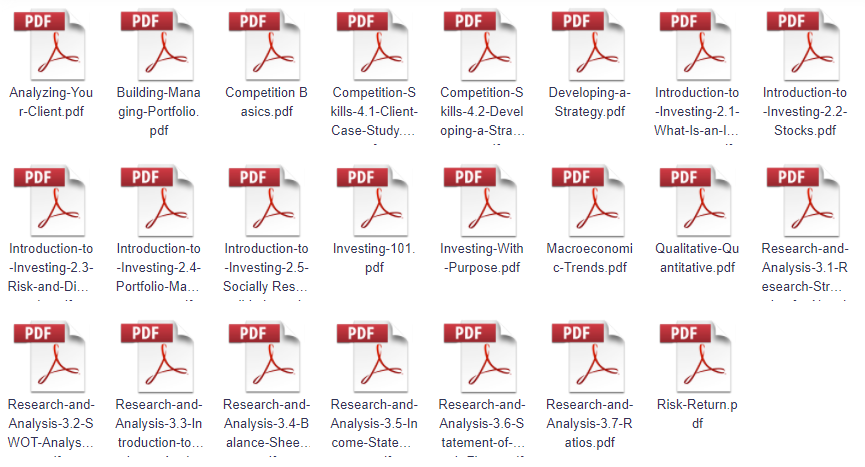
Scan to claim free resources (Original text: "QR Code [Free Access] Past Papers + Case Studies + Required Reading List for Competition Preparation!")
Online Customer Service | WeChat Inquiry

推荐

Online Customer Service
Contact Customer Service